Gaspar Sanz
Instruccion de musica sobre la guitarra española (1697)
for corrections, feel free to send me an email.
La primera Lamina, un Laberinto ingenioso para multiplicar qualquiera son en otros doze, con quantas diferencias quisieren.
La segunda, otro Laberinto de las falsas, y puntos mas estraños, y dificiles que tiene la Guitarra.
La tercera, todos los sones de Rasgueado Españoles para los que empiezan.
La quarta, el Gran Duque, el Baile de Mantua, Zarabandas Francesas, y otros sones estrangeros tambien de Rasgueado.
La quinta, todos los sones de Punteado muy faciles para los que empieçan a puntear.
La sexta, unos Passacalles por la D, con muchas diferencias para soltar las dos manos.
La septima, diez y seis diferencias sobre la Xacara, y algunas dellas con estilo de Campanelas.
La octava, quinze diferencias escogidas sobre el Canario.
La novena, un preludio y fantasia por la O, con mucha variedad de falsas, y una sesquialtera para los que son muy diestros.
La decima, una Alemanda la Serenissima por el mismo punto, y una giga que tiene el aire Inglès.
La undecima, otro Preludio, ò Capricho arpeado por la + con estilo nueuo, y otra sesquialtera de mucho arte.
La duodecima, la Alemana preciosa con campanelas, y su corriente, por el mismo tono.
The first page, an ingenious Labyrinth to multiply any tone into twelve others, with as many variations as desired.
The second, another Labyrinth of false notes and the strangest and most difficult points that the guitar posesses.
The third, all the Spanish strumming sounds for beginners.
The fourth, the Grand Duke, the Dance of Mantua, French Sarabandes, and other foreign sounds also of strumming.
The fifth, all the plucking sounds very easy for those who begin to pluck.
The sixth, some Passacaglias upon D, with many variations to loosen both hands.
The seventh, sixteen variations upon the Xacara, and some of them in the style of Campanelas.
The eighth, fifteen selected variations upon the Canario.
The ninth, a prelude and fantasy upon O, with much variety of false notes, and a sesquialtera for those who are very skilled.
The tenth, an allemande La Serenissima in the same key, and a gigue that has the English air.
The eleventh, another prelude, or arpeggiated capriccio upon + with new style, and another sesquialtera of great artistry.
The twelfth, the precious Allemande with campanelas, and its courante, in the same tone.
Nel el encordar ay variedad, porque en Roma aquellos Maestros solo encuerdan la Guitarra con cuerdas delgadas, fin poner ningun bordon, ni en quarta, ni en quinta. En España es al contrario; pues algunos usan de dos bordones en la quarta, y otros dos en la quinta, y à lo menos, como de ordinario, uno en cada orden. Estos dos modo de encordar son buenos, pero para diversos efectos, porque el que quiere tañer Guitarra para hazer musica ruidosa, ò acompañarse el baxo con algun tono, ò sonada, es mejor con bordones la Guitarra, que fin ellos; pero si alguno quiera puntear con primor, y dulçera, y usar de las campanelas, que es el modo moderno con que aora se compone, no salen bien los bordones, fino solo cuerdas delgadas, a assi en las quartas, como en lea quintas, como tengo grande experiencia; y es la razon, porque para hazer los trinos, y extrasinos, y demàs galanterias de mano izquierda, si ay bordon impide, por ser la una cuerda gruessa, y la otra la delgada, y no poder la mano pissar con igualdad, y sugetar tambien una cuerda recia, como dos delgadas; y à mas desto, que non bordones, si hazes la letra, ò punto E, que es De la sol re, en la musica sale la quinta vacante en quarta baxo, y confunde el principal baxo, y le dà algo de imperfeccion, conforme el contrapunto enseña; y assi puedes escoger el modo que te gustare de los dos, segun para el fin que tañeres.
Para conocer que cuerdas son à proposito, quiero dezir lo que he adquirido con la practica. Antes de poner la cuerda en el instrumento, es una de las señales exteriores, el que sea cristalina, y pareja; pero à mas desto, cogiendo un trecho de la distancia de la Guitarra, la tiraràs con las dos manos, y luego la rebatiràs con un dedo, atendiendo que si vieres en la cuerda confusion de muchas, que se rebuelven à modo de hondas, no vale aquel trecho, pero si vieres que se muestran dos cuerdas distintamente, haste que se quiete, es buena.
Pero à vezes no basta esto, porque fino guarda la proporcion de lo recio, ò delgado, con las demàs ordenes, no te servirà aquella cuerda, aunque la muestra exterior, y prueba fuè buena, y assi es menester prueba intrinseca en la cuerda; y atiende esta regla, que es curiosa.
Pondràs la cuerda en la Guitarra, y tirandola lo que quisieres, buscaràs el dozeno traste, que es justamente la mitad del instrumento, ò distancia de un peunte à otto, y haràs alli prueba Matematica de este modo: Tañe la cuerda vacante, y si hallares que haze octava la misma cuerda en el doze no traste, es buena aquella cuerda, pero si no, bien puedes buscar otra, y si no la tuvieres, puedes remediar, si no del todo, en parte, mudando la cuerda lo de arriba à baxo; y esta prueba suele suceder muchas vezes bien; pero la real, y indefectible, es el medir, y probar la cuerda en el dozeno traste, ò medio de la Guitarra.
Las cuerdas para que estèn en su perfeccion, y no se gasten, se deven conservar en su perfeccion, y no se gasten, se deven conservar en una cagilla, ò cañon de oja de lata, ò fino, en una vadanilla con azeite de almendras dulce; y si no tu vieres comodidad para esso, guardalas en un pucherillo emberniçado bien cubierto, y si fuere nuevo, es mucho mejor, y assi tendràs las cuerdas frescas, y se conservaràn el tiempo que quisieres.
In stringing there is variety, because in Rome those Masters only string the Guitar with thin strings, without putting any drone, neither in the fourth [course], nor in the fifth. In Spain it is the opposite; as some use two drones in the fourth, and another two in the fifth, and at least, as is ordinary, one in each course. These two ways of stringing are good, but for different effects, because he who wants to play guitar to make noisy music, or to accompany the bass with some tone, or tune, the Guitar is better with drones, than without them; but if someone wants to pluck with excellence and sweetness, and use the campanelas, which is the modern way in which it is now composed, the drones do not work well, but only thin strings, both in the fourths and in the fifths, as I have great experience; and the reason is, because to make the trills, and extrasinos, and other gallantries of the left hand, if there is a drone, it impedes, because one string is thick and the other thin, and the hand cannot press with equality, and also subdue a strong string, as two thin ones; and moreover, with drones, if you make the letter, or note E, which is the la sol re in music, the fifth comes out vacant in the fourth below, and confuses the principal bass, and gives it some imperfection, as counterpoint teaches; and so you can choose the way you like of the two, according to the purpose for which you play.
To know which strings are appropriate, I want to say what I have acquired with practice. Before putting the string on the instrument, one of the external signs is that it be crystalline and even; but besides this, taking a stretch of the distance of the Guitar, you will pull it with both hands, and then beat it back with a finger, noting that if you see too much in the string, which revolve like waves, that stretch is not good, but if you see that two strings show distinctly, until it quiets, it is good.
But sometimes this is not enough, because if it does not keep the proportion of thickness, or thinness, with the other courses, that string will not serve you, although the external appearance and test was good, and so an intrinsic test is necessary in the string; and heed this rule, which is curious.
You will put the string on the Guitar, and pulling it as much as you want, you will look for the twelfth fret, which is exactly half of the instrument, or distance from one bridge to another, and you will make a Mathematical test there in this way: Play the open string, and if you find that the same string makes an octave on the twelfth fret, that string is good, but if not, you may well look for another, and if you don't have one, you can remedy, if not completely, in part, by changing the string from top to bottom; and this test often turns out well; but the real, and infallible one, is to measure, and test the string on the twelfth fret, or middle of the Guitar.
The strings, to be in their perfection, and not wear out, should be preserved in their perfection, and not wear out, they should be preserved in a small box, or tube of tin, or if not, in a small leather bag with sweet almond oil; and if you don't have the means for that, keep them in a small glazed pot well covered, and if it is new, it is much better, and so you will have fresh strings, and they will be preserved for as long as you wish.
 Sabido yà encordar, templar, y entrastar, sabràs bien en la memoria el Abecedario, que hallaràs cifrado debaxo
el laberinto, y contiene solos viente puntos, que bastan para formar todas las consonancias perfectas de la
guitarra; y con solas essas veinte letras, apearàs con gran facilidad toda aquella maquina de la primera
pagina;
y se entiende assi la cifra de las letras.
Once you have learned to string, tune, and fret the guitar, you will remember well the alphabet, which you
will
find written below the labyrinth, and it contains only twenty points, which are enough to form all the perfect
consonances of the guitar. With just these twenty letters, you will easily navigate the entire structure of
the
first page, and this is how the cypher of the letters is understood.
Sabido yà encordar, templar, y entrastar, sabràs bien en la memoria el Abecedario, que hallaràs cifrado debaxo
el laberinto, y contiene solos viente puntos, que bastan para formar todas las consonancias perfectas de la
guitarra; y con solas essas veinte letras, apearàs con gran facilidad toda aquella maquina de la primera
pagina;
y se entiende assi la cifra de las letras.
Once you have learned to string, tune, and fret the guitar, you will remember well the alphabet, which you
will
find written below the labyrinth, and it contains only twenty points, which are enough to form all the perfect
consonances of the guitar. With just these twenty letters, you will easily navigate the entire structure of
the
first page, and this is how the cypher of the letters is understood.
Las cinco rayas, significan las cinco ordenes de la Guitarra, los numeros que se escriven sobre estas cinco rayas, son los trastes: es à faber : El uno, significa el primero traste: El dos, el segundo; El tres, el tercero, y assi succesivamente con la misma proporcion de numeros à trastes. Las cuerdas que no tienen numero en el Rasgueado, tambien se tañen, en el Punteado, solo las que se apuntan, y la cuerda que tuviere un cero, se tocarà fin pissar.
Sabido y à los puntos del Alfabeto, aprender àas qualquier tono; pero por mas faciles, pondrè de baxo el mismo Abecedario dos exemplos en dos Passacalles, que por ser breves estos sones, quiero que veas ser verdad lo que te propuse; y formando la C, no muevas la mano izquierda, que no dès los golpes de la mano derecha, que son aquellos señalhos que es se siguen despues de las letras. v. g. [IMAGE]
Si el señal es àzia baxo, dà el golpe àzia aquella parte, y si el señal fuere àzia arriba, haras lo mismo, dando tantos golpes come señeles, [sic]
Sabido yà el Passacalle, mira al Laberinto, con el qual te compondràs, no solo otros veinte y quatro Passacalles, pero por cada uno destos, otras veinte y quatro deiferencias, y muchas mas en esta forma.
The five lines represent the five courses of the Guitar, the numbers written above these five lines are the frets: that is to say, One means the first fret; Two, the second; Three, the third, and so on with the same proportion of numbers to frets. The strings that do not have a number in the rasgueado are also played, [but] in punteando, only those that are noted are played, and the string that has a zero will be played without pressing.
Having learned the points of the Alphabet, you will be able to play any tone; but for easier learning, I will place below the same Alphabet two examples in two Passacalles, which, being brief, I want you to see as true what I proposed; and forming the C, don not move your left hand until you give the strokes with the right hand, which are those signs that follow after the letters. e.g. If the sign points downwards, give the stroke towards that part, and if the sign points upwards, do the same, giving as many strokes as there are signs. e.g.
Once you know the Passacalle, look at the Labyrinth, with which you'll compose not only twenty-four other Passacalles, but for each of these, twenty-four other variations, and many more in this way.
Hallaràs en èl doze columnas, que sobre si tienen doze numeros, y se distinguen tambien con lineas mas gruessas; cada columna tiene dos partes, que es la tercera, mayor, y menor, ò como dizen vulgarmente, el natural, y bemolado; toca el Passacalle que aprendiste, y mira donde hallaràs la C, en las casillas mas altas del Labirento, y la haràs en le tercera columna al lado derecho; despues de la C, buscar la otra letra del Passacalle, que es el A, y la halleràs en la quarta columna; despues de la A, busca la otra letra de que se compone el Passacalle, que es la I, y la hallaràs en la segunde columna al lado derecho.
Hecha esta diligencia, con un Passacalle solo se sacaràn veinte y quatro deste modo, guardando la misma proporcion de columna, y casillas; esto es, que como fueron de la tercera columna à la quarta, si comienças el Passacalle de la segunda columna, iràs desde esta à la tercera, y despues à la primera, concluyendo donde començaste, porque la misma distancia de Musica ay desde el 2. al 3. que del 3. al 4. y assi de todas las letras de aquella tabla; y guardando la misma proporcion de un Passacalle, te compendràs 24. differentes, y assi de los demàs sones.
You will find in it twelve columns, which have twelve numbers above them, and are also distinguished by thicker lines; each column has two parts, which is the third, major and minor, or as they say commonly, the natural and flat; play the Passacalle you learned, and see where you will find the C, in the topmost squares of the Labyrinth, and you will find it in the third column on the right side; after the C, look for the other letter of the Passacalle, which is the A, and you will find it in the fourth column; after the A, look for the other letter that composes the Passacalle, which is the I, and you will find it in the second column on the right side.
Having done this dilligence, with just one Passacalle you will derive twenty-four in this way, keeping the same proportion of column and boxes; that is, as they went from the third column to the fourth, if you start the Passacalle from the second column, you will go from this to the third, and then to the first, concluding where you started, because the same musical distance exists from 2 to 3 as from 3 to 4, and so with all the letters of that table; and keeping the same proportion of one Passacalle, you will compose 24 different ones, and so with the other tunes.
Pero porque deseo que sepas mucho mas, no quiero dexarte con lo referido, que yà han enseñado otros muchos; pero quiero enseñarte à componer diferencias sobre cada uno de todos aquellos que multiplicaste, y esta es la regla que yo he discurrido, y hasta aora no la he visto practicar à ninguno de los Maestros que han compuesto; y es muy facil de esta suerte.
Quando tañes la C, en su lugar puedes tañer quaiquiera de las tres letras que estàn debaxo de la C, recta linea, y perpendicular, y quando de alli passares à la A, puedes escoger à tu arbitrio, en lugar de el A, qualquiera letra qual està tambien debaxo de si recta linea, y perpendicular; y despues como re vàs à la I, puedes tambien escoger qualquiera de las letras que estàn debaxo de si, recta linea; y de esta suerte puedes hazer en un son tantas diferencias, como saltos por las casillas de doze letras, que son tantos, que no los podràs contar sin mucha Arismetica.
But because I wish you to know much more, I do not want to leave you with what has been mentioned, which many others have already taught; but I want to teach you to compose variations on each of all those that you multiplied, and this is the rule that I have devised, and so far I have not seen it practised by any of the Masters who have composed; and it is very easy in this way.
When you play the C, in its place you can play any of the three letters that are below the C, in a straight and perpendicular line, and when you pass from there to the A, you can choose at your discretion, instead of the A, any letter which is also below it in a straight and perpendicular line; and then as you go to the I, you can also choose any of the letters that are below it in a straight line; and in this way you can make in one tune as many variations as jumps through the boxes of twelve letters, which are so many that you won't be able to count them without much arithmetic.
Los numeros que hallares sobre muchas letras del Laberinto, y puntod de algunos sones, son para cortar la Guitarra con el indice, haziendo cegilla, y puente dèl; con que si se halla la G, con un 3 encima, se ha de tender el indice en el tercero traste. Y despues con los demàs dedos formar la G, como fino tuviera numero, pues el numero no le varia la forma, fino el hazerla mas arriba, ò mas abaxo, conferme el numero que tenga sobre si; y lo mismo haràs con las demàs letras que tienen numeros sobre si, pues por esso, aunque son mas de ciento las letras de que se compone la tabla, no tienen mas que veinte formas diversas, que son las veinte letras del Abecedario, porque las demàs que algunos añaden al Alfabeto, como son la R, X, y otras, las tengo por superfluas, pues se comprenden, y explican por otras de las veinte qual te enseño. Esta es la mejor explicacion que te puedo dar desta Obra, con ella, y un poco de estudio que apliques, y à no ferà Laberinto, fino trabajo, y obra tuya; y lo que del amor dixo un Latino, se aplicarà al propsito.
Amor qui
Est Laberintus opus quod, si tu laberis intus,
Non Laberintus erit, sed labor intus erit.
The numbers that you will find on many letters of the Labyrinth, and points of some sones, are to cut the Guitar with the index, making cegilla, and bridge it; with that if you find the G, with a 3 above, you have to tend the index in the third fret. And then with the other fingers form the G, as if it did not have a number, since the number does not change its form, but to make it higher, or lower, will depend on the number it has on itself; And you will do the same with the other letters that have numbers on themselves, for therefore, although there are more than one hundred letters of which the table is composed, they have but twenty different forms, which are the twenty letters of the Alphabet, because the others that some add to the Alphabet, such as R, X, and others, I consider superfluous, since they are understood and explained by others of the twenty which I teach you. This is the best explanation I can give you of this Work, with it, and a little study that you apply, and Labyrinth will not be a fine work, and your work; and what a Latin said of love, will be applied to the purpose.
Love is a labyrinth, which, if you stumble therein, shan’t be a labyrinth, but labor within shall be.
Hallaràs en el segundo Laberinto unas disonancias, ò falsas consonantes, y no te parezcan por esso que es lo mismo que grana blanca. Estudialas, y buelveme la respuesta despues, que creo te daràn en que entender; y son aquellos puntos que entre las letras se señalan con numeros, que por la extravangancia de posturas, no battan las letras. Los puntillos que hallaràs sobre los numeros, ò al lado, significan los dedos de la mano izquierda con que has de pissar los trastes; y si esto no basta, y no te gustaren, digo, que tambien ay musicas cultas, que aunque muchos las oyen, no las perciben fino discretos oidos, pues tambien se prescinden formalidades en la musica, y ay equivocos sonoros. En esta tabla hallaras todas las fallas, y ligaduras, de que se componen las clausulas y cadencias de musica, puestas con su prevencion, y resolucion como enseña la buena composicion: hallaras las quatro vozes, y todo lo mas lleno que se puede tañer en la guitarra; y finalmente, todos los puntos cromaticos, con sus consonancias, y disonancias, que es lo mas dificil, y son de grande util para el que desea faber con fundamento, y acompañarle con la voz. El tiempo, ò aire de essos puntos lo dexo à tu arbitrio, porque como no es mas que un agregado de ligaduras, puedes detenerte en cada punto, rasgueando, ò arpando todas aquellas falsas, el tiempo que te gustare; y assi caminaràs por todas ellas con dulçura, y gravedad; los unos puntos fuerte, y los otros suave, conforme tu buena elecció, porque todos los compases se imitan vnos à otros. Pondràs cuidado, que hallaràs mucha novedad de puntos.
Siguense despues dos paginas, la primera con tiene los sones ordinarios Españoles del Rasgueado, para que con ellos el que empieza, se facilite, y se señoree del instrumento, pues con essos, y la tabla, se puede componer mas de lo que te puedo enseñar. Siguete otra pagina, que contiene sonadas Francesas con Italianas, que por ser el Gran Duque de Florencia, y el de Mantua, tendràn alguna excelencia. Quando halles en qualquiera son dos raitas, significa, que desde alli se ha de repetir segunda vez aquella musica.
Hasta aqui son documentos para tañer rasgueado; y si alguno desea adelantarse, y faber puntear bien la guitarra, le darè las reglas mas principales que usan los mejores Maestros de Roma, que por averlos practicado, y concurrido con ellos en muchas academias, las aprendì de todos, y en particular de Lelio Colista, Orfeo de estot tiempos, de cuyos inmensos raudales de musica, procurè, como quien suè à la fuente, coger el ams sonoro critical que pudo mi corta capacidad.
You will find in the second Labyrinth some dissonances, or false consonances, and do not let them seem, therefore, that it is the same as grana blanca. Study them, and return to me with the answer afterwards, as I believe they will give you something to think about; and those are the points that are marked with numbers between the letters, which due to the extravagance of positions, the letters do not suffice. The dots that you will find above the numbers, or beside them, signify the fingers of the left hand with which you must press the frets; and if this is not enough, and you do not like them, I say that there are also well-cultured pieces of music, which, although many hear them, only discerning ears can perceive, for formalities are also set aside in music, and there are sonorous ambiguities. In this table you will find all the falsas and ligatures, of which the clauses and cadences of music are composed, placed with their preparation and resolution as good composition teaches: you will find the four voices, and all the fullest that can be played on the guitar; and finally, all the chromatic points, with their consonances and dissonances, which is the most difficult, and are of great use for one who wishes to know with foundation, and accompany it with the voice. The tempo, or air of these points I leave to your discretion, because, since it is nothing more than an aggregate of slurs, you can linger on each point, strumming, or arpeggiating all those false notes, for as long as you like; and thus you will move through all of them with sweetness and gravity; some points strong, and others soft, according to your good choice, for all measures imitate one another. Take care, as you will find many novel points.
Two pages follow, the first contains the ordinary Spanish sound of rasgueado, so that with them, the beginner can become proficient and master the instrument, since with these and the table, one can compose more than I can teach you. Another page follows, which contains French and Italian pieces, which, being from the Grand Duke of Florence and the Duke of Mantua, will have some excellence. When you find two lines in any strum, it means that from there it should be repeated a second time.
Up to here documentation for playing rasgueado; and if anyone wishes to advance and know how to pluck the guitar well, I will give them the main rules used by the best Masters of Rome, which, having practiced them and attended many Academies with them, I learned from all of them, and particularly from Lelio Colista, the Orpheus of these times, from whose immense torrents of music I endeavored, like one who went to the source to catch the most resonant critical sound that my limited ability could grasp.
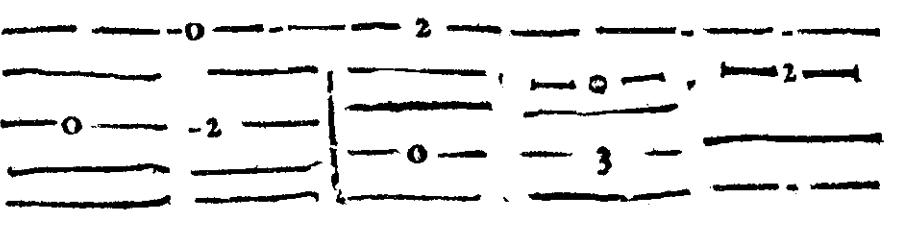
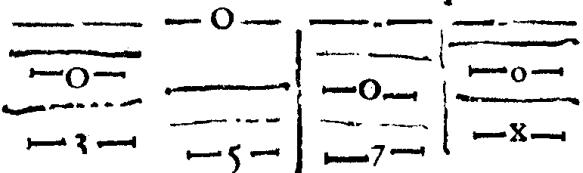
Supuesto que los numeros son los trastes en el punteado, guardan la siguiente execucion. El cero significa, que la cuerda en que se halla, se toca sin pissar, y quando se hallan dos, tres, ò quatro numeros, v.g. [illustration here] en derecho unos de otros, aquellos se tocarà todos juntos, sin arañar las cuerdas, como muchos hazer, fino con mucha policia, lo qual baste para qual se perciba el sonido, y no el impuslo de la mano, aplicando, si fuere necessario, el quarto dedo de la mano derecha para la quarta voz, en algunos puntos. En los demàs numeros que se siguen unos detras de otros, en una misma cuerda, ò en diversas, tocanse succesivamente, procurando, que los dedos de la mano derecha se repartan bien por las cuerdas, alternando los movimientos, y que un dedo no toque dos golpes continuados.
Assuming that the numbers are the frets in the punteado, they observe the following execution. The zero means that the string on which it is found, is played without pressing, and when two, three, or four numbers are found, e.g. aligned one after another, those will all be played together, without scratching.scraping the strings, as many do, but rather with great precision, enough for the sound to be heard and not the impulse of the hand, applying, if necessary, the fourth finger of the right hand for the fourth voice at certain points. For the other numbers that follow one after another on the same string or across different strings, they should be played successively, making sure the fingers of the right hand are well distributed across the strings, alternating the movements, and ensuring that no finger plays two consecutive strokes.
Del pulgar de la mano derecha, es necessario tener grande cuidado, porque como siempre toca la voz baxa, si hallaren dos numeros, aunque sea en las dos rayas mas baxas, procuren que el pulgar toque el bagete, porque le pertenece à èl explicar aquella voz, para que tenga mas cuerpo, y porque no suena tambien la segunda herida àzia arriba con el indice, como con el pulgar àzia abaxo, y pueden probar esta regla en la tercera diferencia de la Xacara, al quarto compàs, y experimentaràs, que alli es mejor tañer la segunda con el pulgar, que con otro dedo, y assimismo en otros casos.
Great care must be taken with the thumb of the right hand, because it always plays the bass voice. If two numbers are found, even if they are on the two lowest strings, one should ensure that the thumb strikes the bass, for it is the thumb's responsibility to define that voice, giving it more depth. This is because the second string does not sound in the same way when played with the index finger upwards as it does when played with the thumb downwards. You can test this rule in the third variation of the Xacara, in the fourth measure, and you will find that it is better to play the second string with the thumb rather than with another finger, and the same applies in other cases.
La mano izquierda debe aplicarse con garbo, y bizarria al mastil, sin asirlo con el pulgar, pues este es el timon de esta sonora barquilla, y no ha de estar fixo, fino dispuesto à todo los aires de las sonadas, y debe arrimarse, y haze fuerza en medio la espalda del mastil, y la muñeca inclinarla àzia las clavijas, para que la mano vaya derecha, y se arqueen mejor los dedos. Supuesto yà que sabes llevar bien la mano izquierda por la Guitarra, es necessario executar diversos primores, y habilidades, que son los siguientes. Se señalan, y llaman assi. Trino, Mordente, Temblor, Extrasino.
The left hand must be applied with grace and bizarria to the neck, without grasping it with the thumb, for the thumb is the rudder of this sonorous little boat, and it must not be fixed, but ready for all the nuances of the sound. The hand should be brought close, and force should be applied to the middle of the back of the neck, with the wrist inclined towards the pegs, so that the hand remains straight and the fingers can arch better. Now that you know how to position the left hand properly on the guitar, it is necessary to execute various refinements and skills, which are as follows. These are marked and called: Trino, Mordente, Temblor, Extrasino.
El trino, y Mordente son muy semejantes, pero tumbien se distingen, en que la voz del trino, no se firma donde se trina, fino medio punto mas abaxo; pero quiero dar una samosa regla, para que sepas donde sale bien el trinado, y lo podràs hazer siempre, aunque no lo halles señalado. En primer lugar, la prima, y segunda vacantes, si tuvieres dedo desocupado, trinarlas, aunque no estè apuntado el trino. Tambien las quartas, y quintas en segundo traste, y todos los quartos trastes. La razon es, porque son mies, ò sustenidos, que en la musica corresponde este nombre à los trinos.
The trino and mordente are very similar, but they can also be distinguished, as the note in the trill is not placed at the point where the trill is played, but rather a half-step lower. However, I want to provide a simple rule so that you know where the trill is properly executed, and you will always be able to perform it, even if it is not marked. First, the first and second empty [strings], if you have a free finger, trill them, even if the trill is not indicated. Also, the fourth and fifth [strings] on the second fret, and all the fourth frets. The reason is that they are flat or sharp, terms that in music correspond to the name of the trills.
El mordente se queda en el mismo traste que trina, y apaga alli la cuerda, pues porque la muerde, con razon le llaman los italianos mordente, à aquel modo de tañer la cuerda.
The mordente remains on the same fret where it trills and dampens the string there, because it "bites" it. For this reason, the Italians call this way of plucking the string mordente.
El temblor se haze ordinariamente con el dedo pequeño, y tambien alguna vez con los otros, desarrimando la mano del mastil, rebatiendola con mucho pulso à un lado, y à otro, con grande velocidad, y prontitud, al mismo tiempo que se tañe el numero señalado assi.
The tremolo is ordinarily performed with the little finger, and sometimes also with the other fingers, lifting the hand from the neck, moving it back and forth with great control to one side and the other, with high speed and swiftness, at the same time that one plays the marked note.
El extrasino se haze tañendo con la mano derecha solo, el primer numero que està dentro aquel rasgo, de esta suerte, y despues de herido se corre la mano izquierda con alguna fuerça, por los numeros ligados, dandoles el valor que pidiere la sonada. Estas quatro habilidades son las mas comunes de la cifra Italiana, pero aun ay dos mas, que pocas vezes se apuntan; pero por no dexar todo aquello que sea primoroso, y es lo mas delicado que tiene la Guitarra, yo no tienen los demàs instrumentos, los declarè tambien; y atiende con cuidado à lo siguiente.
The extrasino is performed by playing with the right hand alone the first number that is within that marking, in this manner, and after striking it, the left hand slides with some force through the tied numbers, giving them the value that the piece requires. These four skills are the most common in Italian tablature, but there are still two more, which are rarely notated; but so as not to leave out anything that is excellent, and is the most delicate that the guitar has, which other instruments do not have, I will explain them as well; and pay careful attention to what follows.
Un numero se puedo herir de dos modos, al uno se llama con apoyamento, y el otro con esmorsata. De estot mismos nombres usa lelio; y aunque Italianos ingierelos con los demàs Españoles, pues el nombre de Extrasino, tambien es Italiano. El numero con apoyamento, se hiere de esta fuerte: si hallas un uno en la prima, para tañer este numero, heriràs la primera vacante, y al instante pissala en primero traste, de fuerte, que en realidad pissas la que no tocas, y tocas la que no pissas; porque aunque heriste la prima vacante, le robaste su voz, y la aplicaste al primero traste que suena, y no le tañiste. La esmorsata es al contrario, que roba la consonancia por abaxo. Pongo el mismo exemplo: has de tañer la prima en primero traste, la heriràs primero en tercero, y al instante pisasndo el primero haràs que se siente este numero que no se hiriò. Esto, si lo executas, es lo mejor que te he enseñado para herir la cuerda, con tal sainete, que no parezca guitarra, sino vozes, à que no llegan las manos; y estos dos generos de tañer en nuestra lengua Española, les llamaràs Ligaduras, y la haràs en los numeros que tienen sobre si, ò debaxo un señalito à modo de parentesis, de esta manera . El exemplo, y uso de esta Esmorsata, ò Ligadura, lo hallaràs en la Xacara, en la segunda diferencia, al quarto compàs, ligando el cero de la primera, con el cinco del modo referido.
A number may be struck in two ways, one is called with “apoyamento”, and the other with "esmorsata". Of these same names Lelio uses; and although Italians introduced them, they are shared with the Spanish, since the term extrasino is also Italian. The number struck with apoyamento is performed as follows: if you encounter a one on the first string, to play this number, you strike the open first [string], and immediately press it at the first fret, in such way that in reality you press what you do not play, and play what you do not press; because although you struck the first open [string], you steal its voice, and applied it to the first fret, which sounds without being plucked. The esmorsata is the contrary, that steals the consonance from below. I give the same example: when you have to play the first string at the first fret, you will firstly strike it at the third [fret], and immediately pressing the first [fret], you will make it so that you hear the number that was not struck. This, if you execute this properly, will be the finest I can teach you for striking the string, giving it such grace that it no longer sounds like a guitar, but like voices hands cannot reach; and these two ways of playing you shall call ligatures in our Spanish language, and you will use them on notes marked above or below with a small symbol resembling a parenthesis, in this manner . The example and application of the esmorsata, or ligadura, can be found in the Xacara, in the second variation, in the fourth measure, where you tie the open note of the first [string] with the fifth fret as described.
Se suele hazer el arpeado de dos modos, ò con tres dedos, ò con quatro; tañense las cuerdas sucessivamente, començando con el pulgar el baxo, y luego las cuerdas mas inmediatas cifradas, subiendo, y baxando los dedos por todas ellas sobre aquel punto, dandole el tiempo, ò compas que pide la sonada. Este modo de tañer se señala con una raita, entre dos puntos; v.g. . y tambien con una raya à modo de parentesis, que coge de arriba à baxo los puntos que se han de arpear, como lo veràs cifrado en la pagina undecima, en el preludio, sobre la (+) advirtiendo, que no tañas ningun numero de aquellos que estàn dentro aquella raya, hasta que la mano izquierda estè dispuesta como si los huviesses de tañer a un tiempo, y despues tañerlos uno detras de otro, como se señalan, executandolo todo con igualdad, y desta fuerte te gustarà este nuevo estilo de musica.
The arpeggio is usually played in two ways, or with three fingers, or with four; the strings are played successively, beginning with the thumb on the bass, and then the nearest strings marked, going up and down the fingers through all of them over that point, giving it the time or compass that the piece requires. This way of playing is marked with a small line between two points; e.g. , and also with a line like a parenthesis that goes from top to bottom on the points that are to be arpeggiated, as you will see marked in the eleventh page, in the prelude, over the (+), advising that you do not play any number of those that are within that line until the left hand is positioned as if you were going to play them all at once, and then play them one after another, as they are marked, executing everything with equality, and in this way this new style of music will please you.
Explicados ya todos los primeros de una, y otra mano, es necessario faber el uso, y practica, porque cada dia vemos que dos tañeràn una propia sonada, y mismo compàs, y no obstante el uno contenta, y el otro disgusta. La razon es, porque la mano derecha ha de ir igual con la izquierda, tañendo al mismo instante que pissa la otra, y no todos lo hazen assi, y a vezes no basta esto, fino que se pissen la cuerdas con arte, y destreza, que es desta fuerte; y atiende, que lo siguiente importa mucho.
Quando de un traste baxas a otro, no quites el de un compàs la cifra que estuviere debaxo, y se abrevia mucho hasta hallar otra señal; si acaso tiene le ganchillo culebreado, de este modo [bl_] llamase semicorchea, y los numeros que tiene debaxo se corren mucho mas que todos, hasta topar otro signo.
Aora en la proporcion, ò cifra que tiene al principio un tres grande, v.g. 3. la figura redonda con un puntillo, v.g. O. vale un compàs, y daràs este valor à la cifra que tenga debaxo; y la figura blanca que valia medio compàs en el compasillo, vale un tercio en la proporcion, y de aqui careando las demàs figuras, te puedes governar. Advirtiendo, que en todo tiempo has de dar à las cifras el valor, y compàs de la figura que tinen sobre la cifra otra figura de musica, à todos aquellos numeros les daràs el valor de la figura que al principio tienen. Por lo qual, si en el compasillo ò proporcion se halla una figura blanca, tañeràs aquella cifra muy à espacio; y al contrario, si hallas figura negra, y con un ganchillo, tañeràs aprissa aquella cifra, sin detenerte, hasta que halles otra figura, aunque sea en grande distancia, como sucede en algunas glossas, que deste el principio de la sonada, se corre sin parar hasta el fin, y assi te podràs governar en todas las cifras; y si tienes cuidado de observar estas reglas, tañeràs qualquiera papel de cifra con el aire, y compàs que pide la musica; sin aver menester maestro de capilla que te lo explique.
Este Tratado te podrà servir de sumulas, y primeros rudimentos, recibe solo mi voluntad, y cariño; y en credito desta verdad, publico esta primer Obra, y despues las demàs, en beneficio de la juventud bien inclinada, para que despues de las tareas principales del estudio, pueda el vurtuoso desterrar el ocio con exercicio tan decente como este, aconsejandote con un poeta:
Interpone tuis interdum gaudia curis,
Ut possis animo quemquam suffere laborem.
Para que recreado el animo, buelvas despues con mayor contato a tue principal ocupacion, acordando con tu prudencia, los altos, y baxos del tiempo; y no fuera para mi poca gloria, si esta musica te a partasse de otras menos decentes, pues podrias entonces darme las gracias con Horacio en su Arte Poetica.
Omne tulit punctum, qui miscuit utile dulci,
Lectorem delectando, pariterque momendo.
Having explained all the basics of the right and left hand, it is necessary to put them into use and practice, because we see daily that two players may perform the same piece and rhythm, yet one pleases and the other displeases. The reason is that the right hand must act in accordance with the left, playing at the very instant the other presses the string. Not all achieve this, and sometimes even that is not enough unless the strings are pressed with skill and artistry, as follows; pay attention, for what comes next is of great importance.
When descending from one fret to another, do not lift from a cypher on the string until its duration is complete, thus it would be greatly shortened until you find another sign. If the note bears a curled hook, like this , it is called a semiquaver, and the notes below it flow much faster than others until another sign is encountered.
Now, regarding proportions or ciphered time, if at the beginning there is a large three, e.g. 3, a round note with a dot, e.g. O., is worth one measure. This value applies to the figure below. A white note, which in common time is worth half a measure, is worth a third in proportion. From this, by calculating other figures accordingly, you can guide yourself. Note that you must always assign to the ciphers the value and time of the musical figure above them. All numbers below will follow the value of the initial figure. Thus, in common or proportional time, if a white figure is found, you will play that cipher slowly; conversely, if you find a black note with a hook, you will play that cipher quickly, without pausing, until encountering another figure, even if separated by great distances, as happens in some ornaments where the piece runs uninterrupted from start to finish. By following this method, you will govern all ciphers effectively, and by observing these rules, you will play any ciphered piece with the air and rhythm demanded by the music, without needing a chapel master to explain it.
This treatise may serve as a summary and foundation. Accept it as a token of my goodwill and affection. In testament to this truth, I publish this first work and, subsequently, others, for the benefit of well-disposed youth, so that after the main labors of study, the virtuous may banish idleness with such a proper exercise as this. As a poet counsels:
Interpose joy among your cares,
So that you may endure any labor with your mind refreshed.
By renewing your spirit, you may later return with greater satisfaction to your principal occupation, harmonizing the highs and lows of time with your prudence. It would not be a small glory for me if this music diverted you from less virtuous pursuits, for then you might thank me with Horace in his Ars Poetica:
He has won every point who has mingled the useful with the sweet,
Delighting and instructing the reader at once.